


Get a business valuation
A proper valuation of your practice, before anyone else puts a number on it.
If you are planning a sale, bringing in a partner or simply want to know where you stand, a CareConcierge practice valuation gives you a buyer’s-eye view of the business you have built.
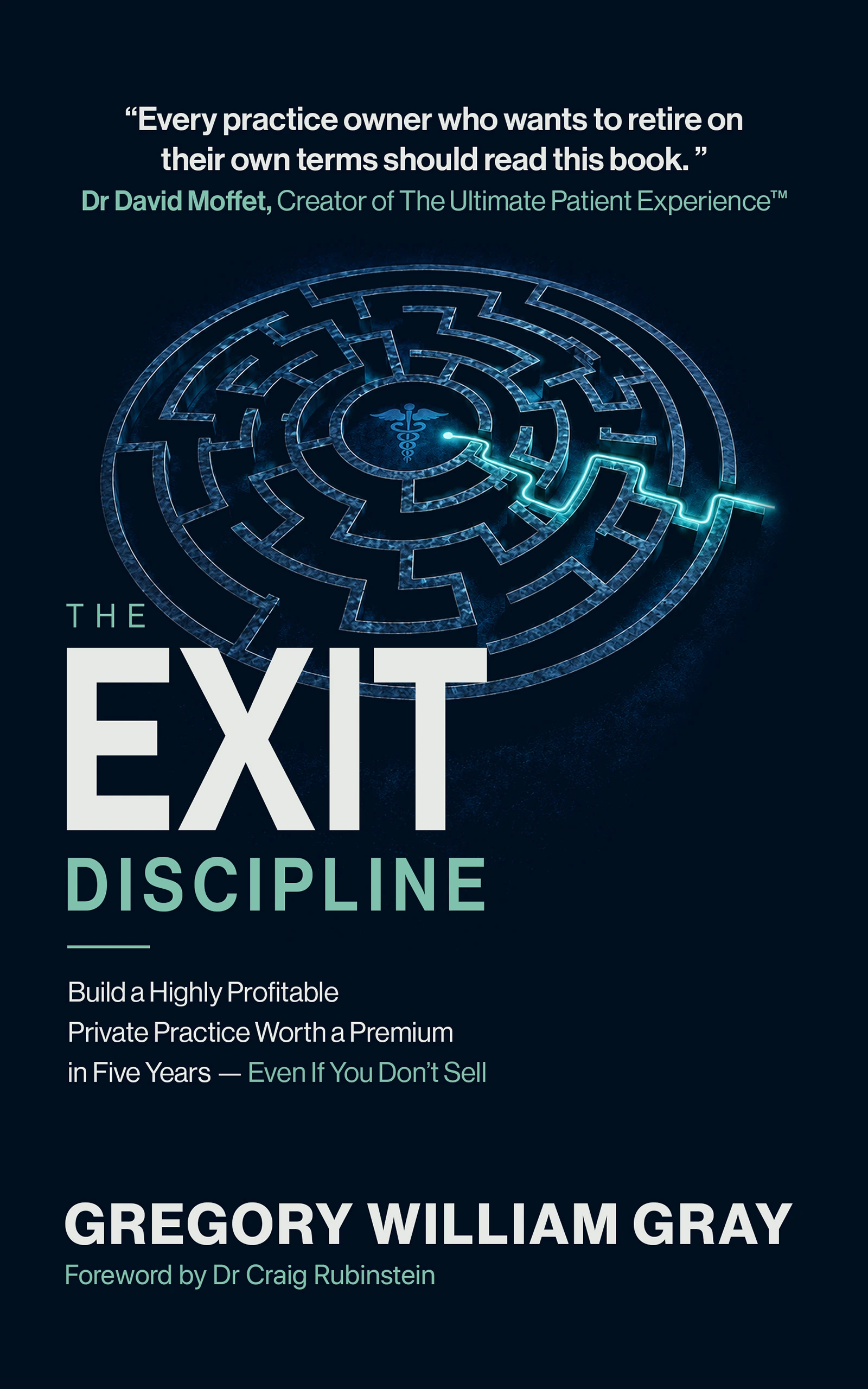
It is led by Gregory Gray, author of The Exit Discipline, with advisers from investment banking and law, for private healthcare practices in Australia, the United Kingdom, Switzerland and the United States.
Scope, any fee and timing agreed with you before work begins.
What the valuation weighs
The lenses a buyer looks through, and what you will bring to each.
A proper valuation looks past turnover to the earnings a buyer will believe continue after you step back. Choose a lens to see what we examine, why it matters to a buyer and what you will be asked to provide.
Nothing here needs patient information, and nothing is needed to start but a conversation.
Maintainable earnings
What we look at
Your accounts restated as a buyer would run the practice: a fair cost for the clinical work you do yourself, personal and one-off items removed, and each adjustment tested against its evidence.
Why a buyer cares
A buyer pays for profit they expect to continue. Every adjustment they reject comes off the earnings their price is built on, so the evidence matters as much as the figure.
What you will provide
Three years of accounts and tax returns, current management accounts and your accountant’s notes on adjustments.
Read the practice valuation guideHow much depends on you
What we look at
The share of fee income that is your own list, the decisions that wait for you, and the patients and referrers who know only you.
Why a buyer cares
What would leave with you is what a buyer discounts, defers or ties to your staying on. It often shapes the structure of an offer as much as its price.
What you will provide
Fee income by clinician, your team structure and who holds which responsibilities, and a candid view of the relationships that run through you.
Take the exit readiness self-assessmentPatient demand
What we look at
The sources of new patients and the cost of each, the path an enquiry takes, and how much of it can be shown rather than described.
Why a buyer cares
A buyer wants to know whether new patients arrive because of the practice or because of you, and whether marketing spend produces patients or only clicks.
What you will provide
Marketing spend by channel, any referral-source records and, if you have one, a documented enquiry record such as a monthly Conversion Intelligence report.
Explore Conversion IntelligenceThe team and its agreements
What we look at
Who does the clinical work, on what agreements, how long key people have stayed and how likely they are to stay under a new owner.
Why a buyer cares
Associates and coordinators who leave after a sale take patients and know-how with them, and a buyer prices that risk with care.
What you will provide
Employment contracts, associate and contractor agreements, and any restraint or non-solicitation terms.
Premises, equipment and compliance
What we look at
The lease, its term, options and assignment conditions; equipment and its service history; and the compliance records a buyer’s adviser will ask for.
Why a buyer cares
A short lease, or a landlord’s consent nobody has asked for, can stall a sale. Ageing equipment becomes a cost the buyer takes off the price.
What you will provide
The lease and key agreements, an equipment register with service records, and current registration and compliance files.
What a buyer examines in a saleYour figures are seen only by the people carrying out the valuation, and never shared without your agreement.
Get your practice valued
A buyer’s-eye view of your practice, from a first conversation to a full valuation.
Tell us about the practice and why you want a valuation now. No patient information is needed, and asking for a valuation does not commit you to a sale or to any other service.
- IndependentA buyer’s-eye view of your practice, with no transaction to sell you
- ConfidentialNo obligation, and no pressure to sell
What you’ll leave knowing
What the practice is worth:
A clear view of value, discussed with you in person, and what would change the number.
How much rests on you:
How much of the value would leave with you, and how much the practice already holds on its own.
What to strengthen first:
The changes most likely to matter before a sale, a partner or simply a stronger practice.
How an offer might be shaped:
Why dependence and evidence affect structure as well as price: cash at completion, deferred payments or a period of staying on.
Where it begins
A private conversation with Gregory Gray about your practice and what you want to know. Then a full valuation with advisers from investment banking and law, its scope agreed with you before any work begins.
The next step is a conversation, not a commitment.
Practice valuation FAQs
Before you ask for a valuation, what owners want to know.
Who carries it out, how it works, what it costs and what stays confidential, with the detail behind each answer.

Who carries out the valuation?
Gregory Gray, author of The Exit Discipline, with advisers from investment banking and law who work with him on practice valuations.
How does it work, from first conversation to valuation?
You decide at each step whether to go on. Nothing proceeds until the scope is agreed.
- Tell us about the practiceBook a conversation or send a written request: the kind of practice, where it is and why you want a valuation now. No patient information is needed.
- Agree the scopeWhat the valuation will review, what we need from you and how long the work is likely to take. You decide whether to go ahead.
- Share your figures in confidenceYour accounts and records are reviewed by Gregory Gray and the advisers working with him, under confidentiality, and used for nothing else.
- Discuss the valuationA clear view of what the practice is worth, what a buyer would examine and what would change the number, talked through with you in person.
What will it cost?
We set out the scope and any fee before work begins, and nothing proceeds until you agree.
Does a valuation mean I have to sell?
No. Many owners ask for a valuation to plan, to bring in a partner or simply to understand where they stand. Asking does not commit you to a sale or to any other service.
Which practices and markets do you value?
Owners of private healthcare practices in Australia, the United Kingdom, Switzerland and the United States, with the scope agreed for your practice before any work begins.
Dental
General and specialist dental practices.
Surgical
Plastic, reconstructive and other specialist surgical practices.
Skin
Medical and cosmetic dermatology.
Private medicine and allied health
Private medical practices, and allied health such as physiotherapy, audiology and optometry.
Who sees my figures?
Only the people carrying out the valuation. Your figures are reviewed in confidence, used for nothing else and never shared without your agreement. You can begin with a conversation nobody else in the practice needs to know about.
Does CareConcierge buy practices or broker sales?
No. CareConcierge does not buy practices, broker sales or introduce buyers. That is what makes the valuation independent: there is no transaction to sell you. If you later sell, advisers you appoint act for you: a broker, an accountant and a lawyer.
Is this advice?
This page is general information. The valuation is a professional view of value; for legal, tax, accounting or financial advice about your own circumstances, speak to your own adviser.